
Contemporary textile art shaped by personal expression, unexpected materials and an intuitive approach to design.
A personal approach to textile art
Textiles have always been more than materials to work with. They offer endless possibilities for expression through colour, texture, structure and form. In her textile art, Hala Yousif explores these possibilities in a personal and intuitive way, bringing together different materials, techniques and visual influences.
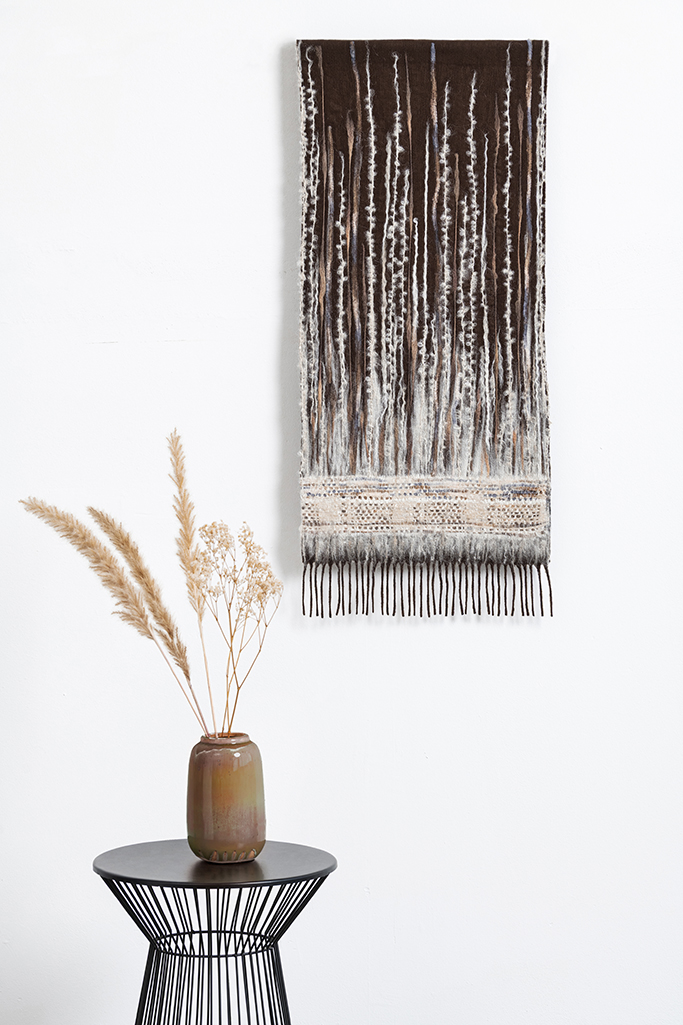
Her work reflects a sensitivity to colour and an exceptional ability to recognise the potential of materials, including those that might otherwise be overlooked. Textile remnants, leftover yarns and fragments of existing fabrics become starting points for new compositions. Their differences in colour, texture and structure are not limitations but opportunities for exploration.
This approach results in contemporary textile art that is expressive, layered and individual. Each composition develops its own identity, shaped by the materials available and the creative decisions made along the way.
The beauty of recycled textile materials
An important aspect of Hala’s work is the reuse of leftover textile materials. Rather than beginning with newly produced materials and a predetermined design, she often starts with what is already available.
Fragments of fabric, yarns and fibres, each with their own characteristics, are brought together in unexpected combinations. Materials that were originally intended for different purposes can find a new relationship within a single composition.
This process gives recycled textile art a particular character. Differences in colour, thickness, texture and structure remain visible and contribute to the final expression. What might traditionally be considered an imperfection becomes part of the artwork.
Sustainability is therefore embedded in the creative process. It is not simply a statement about using recycled materials, but a way of looking at resources differently. Existing materials are given renewed value through imagination, experimentation and design.
The result is textile art that connects creative expression with a thoughtful approach to material use.
Between technique and intuition
Hala’s creative process combines mechanical textile techniques with manual interventions and intuitive decisions. The machine provides technical possibilities and structure, while working by hand allows room for experimentation, adjustment and spontaneity.
There is no strict boundary between designing and making. A composition can change considerably during its development. Materials are combined, textures are explored and colours are brought together until the different elements begin to form a coherent whole.
Sometimes the starting point is a particular material. On other occasions, a colour combination or an emerging texture provides the direction.
This is what makes her approach to experimental textile design distinctive. The process is not entirely planned or controlled. It leaves room for unexpected discoveries and allows the material itself to influence the outcome.
The resulting surfaces can be rich and layered, sometimes irregular or almost sculptural. They reveal the interaction between different fibres, textile structures and techniques.
A visual language shaped by life experience
An artist’s visual language does not develop in isolation. It grows from experiences, memories, cultural influences, observations and encounters throughout life.
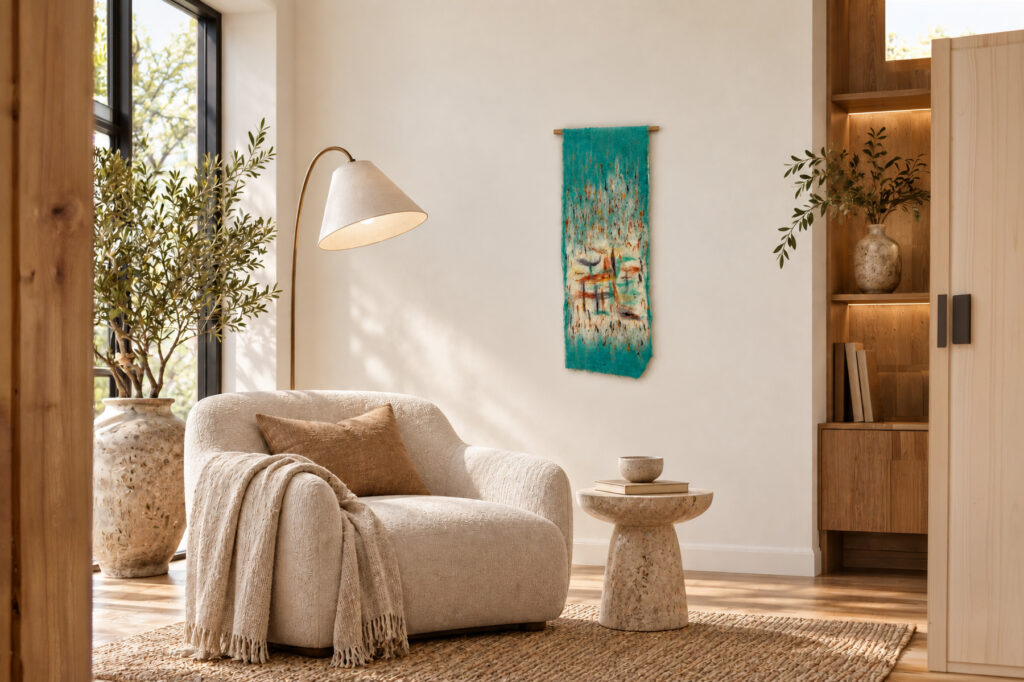
For Hala, her personal journey forms an important part of her creative reference framework. Everything she has encountered and experienced contributes to the way she sees the world and translates it into colour, material and form.
Her particular sensitivity to colour is strongly expressed in these compositions. Contrasting colours can exist alongside subtle transitions. Unexpected combinations create visual tension, while different textures introduce depth and movement.
The work does not necessarily represent a recognisable object or tell a predefined story. Instead, it reflects an individual way of seeing and interpreting the world.
This personal dimension distinguishes Hala’s textile art from conventional interior textiles. The compositions are not primarily developed to follow a trend or match a particular interior. They emerge from an artistic process in which personal experience, material knowledge and intuition come together.
Texture as an artistic expression
In contemporary textile art, texture is much more than a physical property. It influences how a work is experienced, how light interacts with its surface and how different materials relate to one another.
Hala explores the contrasts between dense and open structures, soft and irregular surfaces, and subtle and expressive colour combinations. Different fibres and textile remnants create layers that reveal new details when viewed from different angles.
These qualities give each composition its own visual depth and character.
The interplay of materials can make a textile surface appear almost three-dimensional. Some elements stand out, while others blend into the background. The result is an artwork that invites closer observation and offers something different with every viewing.
Textile wall art and unique interior objects
Textile art can bring an entirely different dimension to an interior. Beyond its decorative function, it introduces material depth, artistic expression and a more personal atmosphere.
Hala’s work can be experienced as textile wall art, an individual textile object or an artistic source of inspiration for interior projects. Its distinctive textures and colour compositions can become a focal point in a space or provide an unexpected contrast within a carefully designed interior.
For architects, interior designers and private collectors, unique textile art offers an alternative to conventional wall decoration and standard interior textiles.
Each piece has its own character, making it particularly suitable for interiors where individuality, material expression and artistic identity are important.
An ongoing textile art exploration
The Textile Art collection by Halle Design brings together individual works, material explorations and experimental compositions. Rather than following a fixed design formula, the collection evolves through an ongoing process of discovery.
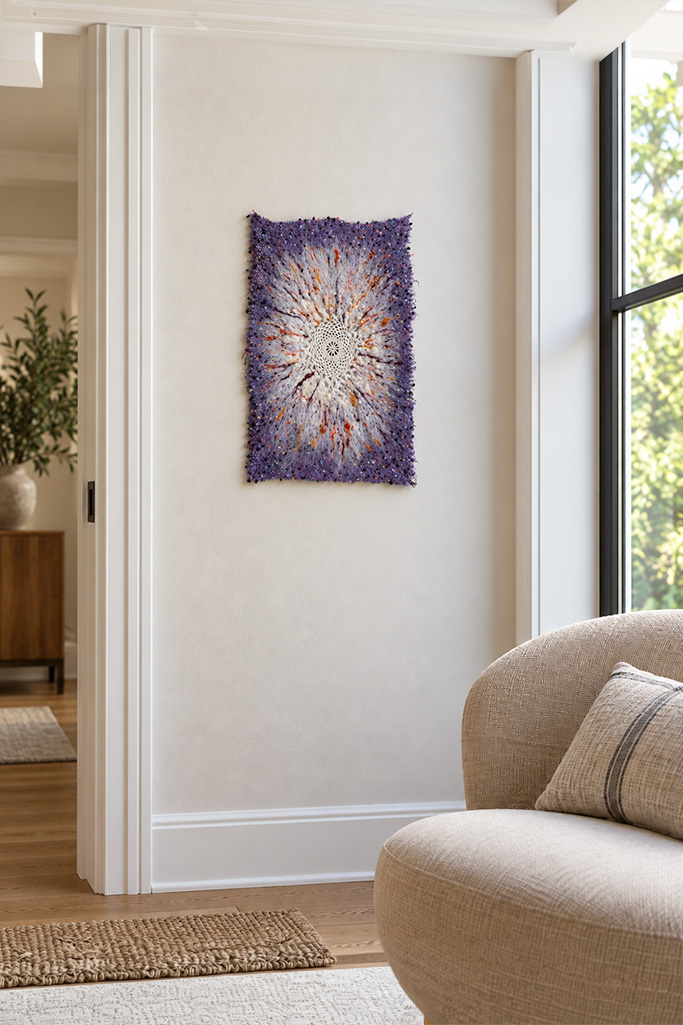
For Hala, working with textiles means remaining open to possibilities. A seemingly unrelated combination of materials can create unexpected harmony. A discarded textile fragment can become the defining element of a new composition. A technical experiment can lead to an entirely different artistic direction.
This is the essence of her work: allowing colour, material, technique and intuition to interact freely.
At Halle Design, we see textiles as much more than functional materials. They can express ideas, evoke emotions and add a distinctive artistic dimension to the spaces we inhabit.
Co-Explore the possibilities of Textile Art
Hala’s textile art opens up possibilities beyond conventional interior textiles. The combination of expressive colours, unexpected materials and distinctive textures can inspire new directions in interior design, architectural projects and fashion.
For interior designers, architects and fashion designers, these textile explorations may offer inspiration for unique applications, bespoke creations or collaborative projects.
Are you interested in exploring the possibilities of Hala’s textile art for your own project or creative practice? We would love to hear from you.
Contact Halle Design to discuss ideas, explore materials and discover the possibilities of working together.